SpaceX · Starbase, TX
What Is Starship?
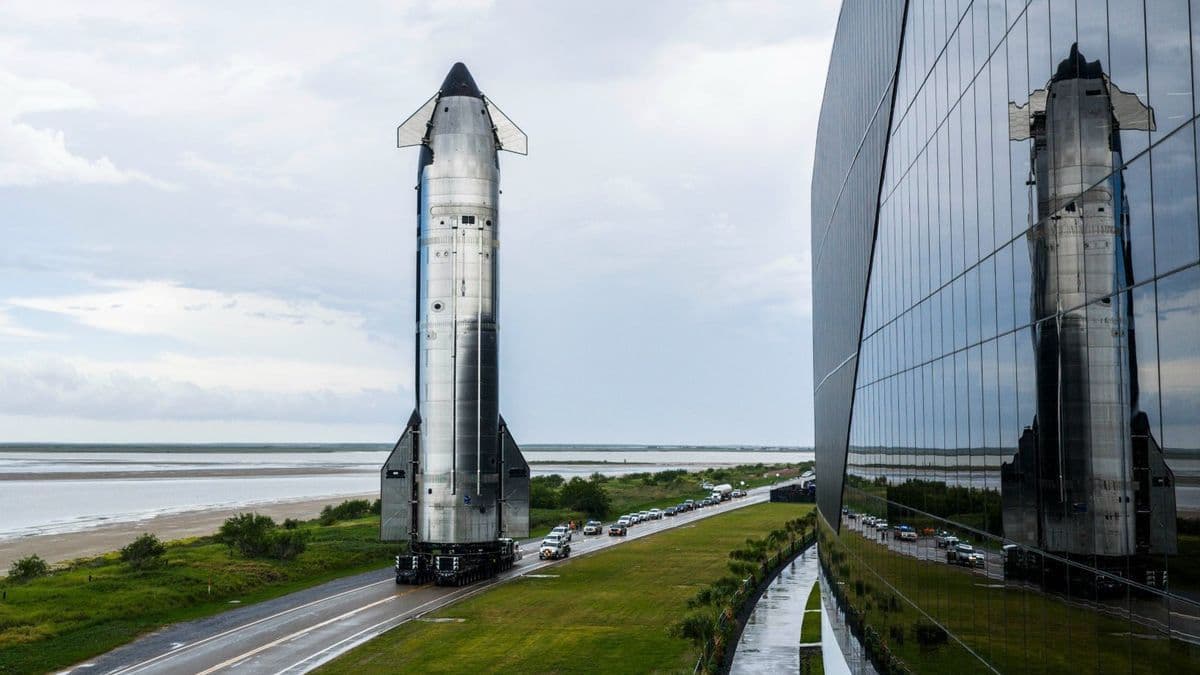
Starship is the fully-reusable launch system SpaceX is building and flying at Starbase, Texas: a Super Heavy booster and the Starship upper stage, stacked nearly 400 feet tall. It's the largest and most powerful rocket ever built, designed to carry more than 100 metric tons to orbit and to land both stages for reuse.
Height
397 ft
121 m, fully stacked
Diameter
30 ft
9 m
Liftoff Thrust
~16M lbf
~74 MN
Raptor Engines
33 + 6
booster + ship
Propellant
Methalox
liquid CH₄ + LOX
Payload
100+ t
to orbit (target)
Stages
2
fully reusable
Booster Recovery
Catch
returns to the tower
Starship to scale
Nearly 400 feet tall
Fully stacked, Starship stands about 397 ft (121 m), nearly as tall as The Sapphire, the tallest tower on South Padre Island, and roughly 7× the height of Big Tex.
1,025 ft
1,002 ft
403 ft
397 ft
55 ft
Waterline
Austin · Tallest in TX
JPMorgan Chase Tower
Houston
The Sapphire
South Padre Island
Starship
Starbase
Big Tex
Dallas
Height comparison, tallest to shortest: Waterline in Austin · Tallest in TX, 1025 feet (312 meters); JPMorgan Chase Tower in Houston, 1002 feet (305 meters); The Sapphire in South Padre Island, 403 feet (123 meters); Starship in Starbase, 397 feet (121 meters); Big Tex in Dallas, 55 feet (17 meters).
Mission Profile
How a Starship Flight Works
From liftoff to splashdown, the way a Starbase launch actually flies. After hot-stage separation the path splits: Super Heavy boosts back for a tower catch, while Starship flies on and comes down downrange.
Launch
33 Raptors ignite; the full stack lifts off
Max Q
Peak aerodynamic stress on the vehicle
Hot-Stage Separation
Ship's engines light and push off the booster
Super Heavy: returns to Starbase
Boostback Burn
Super Heavy flips and burns back toward Starbase
Landing Burn
Relights to slow down for the catch
Tower Catch
Mechazilla's chopstick arms catch the booster
Starship: flies on downrange
Engine Cutoff
Ship reaches near-orbital speed; engines cut off
Coast
Falls halfway around the planet
Reentry
Heat-shield tiles glow at peak heating
Bellyflop
Falls belly-first; flaps steer the descent
Flip & Landing Burn
Flips upright and relights to slow down
Ocean Splashdown
Soft touchdown in the Indian Ocean
Vehicle Evolution
Three Generations of Ship
Starship is developed by flying. Each block is a bigger, more capable vehicle than the last. The flight log shows exactly how the hardware changed from one generation to the next.
Flights 1–6
The first-generation stack. Proved hot-stage separation, full 33-engine ascents, and the earliest reentry attempts.
Flights 7–11
A taller, higher-capacity ship: more propellant and reworked flaps as the program pushed toward full reuse.
Flights 12–15
The current generation, built for routine reuse and higher performance. The version flying now.
Next Launch
Starship Flight 15
Q4 2026 · No date yet · Viewing guide →
See every Starship flight →
The full flight log: dates, outcomes & milestones for Flight 1 to now
Starship FAQ
How tall is Starship?
Fully stacked, Starship stands about 397 feet (121 meters) tall: the Super Heavy booster plus the Starship upper stage. That makes it the tallest rocket ever flown, nearly as tall as The Sapphire, the tallest tower on South Padre Island.
How powerful is Starship?
Super Heavy's 33 Raptor engines produce roughly 16 million pounds of thrust (about 74 meganewtons) at liftoff, making Starship the most powerful rocket ever built, well beyond the Saturn V that flew the Apollo missions.
Is Starship reusable?
Yes. Starship is designed to be fully reusable. The Super Heavy booster flies back to Starbase to be caught by the launch tower's arms, and the Starship upper stage is designed to return and be reused as well, the goal that drives the whole program.
Where is Starship built and launched?
Starship is built and launched at Starbase, SpaceX's facility near Boca Chica Beach in South Texas, just outside Brownsville. Launches are visible from the public areas along Highway 4 and from South Padre Island across the bay.
How does a Starship flight work?
The full stack lifts off together. After hot-stage separation, the Super Heavy booster boosts back toward Starbase for a tower catch while the Starship upper stage continues to space and comes down downrange for a splashdown. See the mission-profile diagram above for the full sequence.